

Quick answer: Bhubaneswar, the Temple City, has hundreds of old temples. The ones most worth seeing are Lingaraj, Mukteswara, Rajarani, Brahmeswara and Parasurameswara, and the best months to visit are October to March. Livotel Premium Hotel in Prasanti Vihar, Patia, is a comfortable base with complimentary breakfast and free Wi-Fi.
Bhubaneswar was known in old texts as Ekamra Kshetra, the sacred mango grove, and once had hundreds of temples. Many still stand, most of them in Old Town around the Bindu Sagar lake. This guide covers 20 temples worth your time, how to plan the visit, and where to stay. If you need a base, Livotel Premium Hotel in Patia has AC rooms, complimentary breakfast and a 24/7 front desk.
Unlike some busy pilgrimage cities, most of Bhubaneswar’s old temples are calm, easy to walk between and close together. In one morning you can see temples built over several centuries and watch how the style changed. Our hotel, Livotel Premium Hotel, is in Patia in the north of the city, so Old Town is a cab or auto ride away.
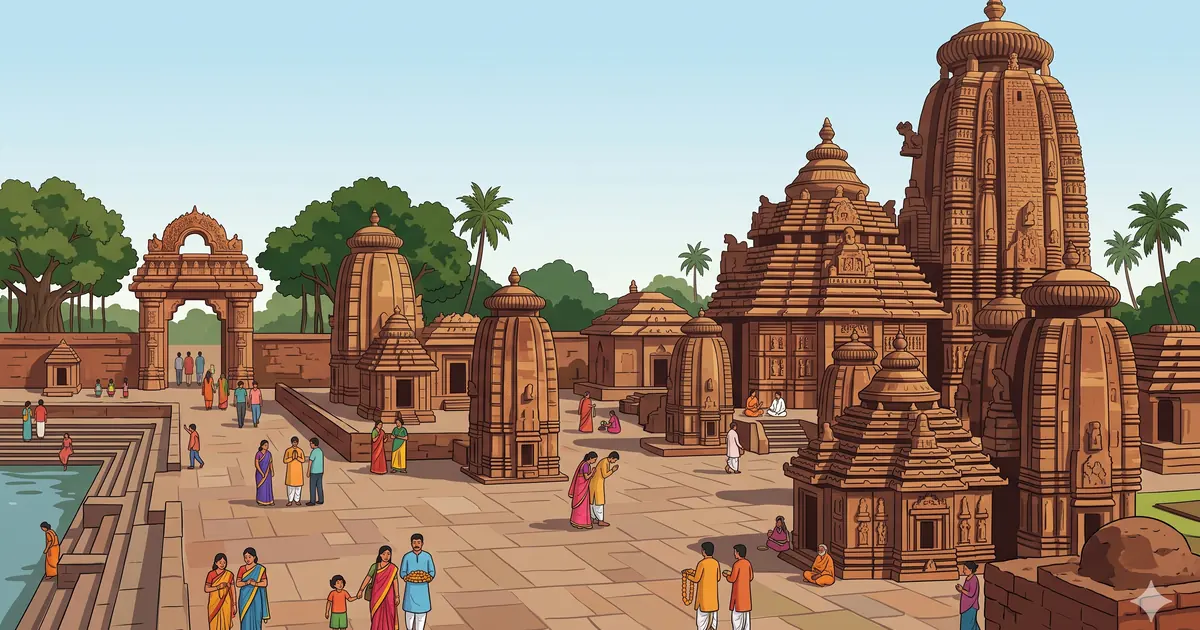
The old temples follow the Kalinga style of Odisha. Most have two main parts: the deul, the tall curved tower over the sanctum, and the jagamohana, the assembly hall in front of it with a stepped, pyramid-shaped roof. Once you know these two parts, it is easy to compare temples as you go, from the early, simpler Parasurameswara to the towering Lingaraj.
The best-known temple in Bhubaneswar, built in the 11th century and traditionally linked to the Somavamshi kings. Its main tower rises about 55 metres, and the walled compound holds well over a hundred smaller shrines. The presiding deity is worshipped as Harihara, a combined form of Shiva and Vishnu. Only Hindus may enter the inner compound; other visitors can see the temple from a viewing platform outside the north wall. Mahashivaratri brings very large crowds, so go early if you visit then.
A small 10th-century temple famous for its carved stone torana, an arched gateway in front of the shrine. The carvings of figures, animals and scrollwork are some of the finest in Odisha, which is why it is often called the gem of Odisha architecture. The Mukteswara Dance Festival of Odissi dance is held here every January.
An 11th-century temple named after the yellowish sandstone it is built from, locally called rajarani. There is no deity worshipped here today, and it is maintained as a monument. Look closely at the walls for the carved female figures and guardian deities. The Rajarani Music Festival takes place in its grounds each January.
Built around 1058 CE and linked by an inscription to Queen Kolavati Devi, Brahmeswara is a panchayatana temple: a main shrine with four smaller shrines at the corners of its platform. It is also noted for its early use of iron beams in the structure. The outer walls are covered in carvings of musicians, dancers and deities.
Dating to around the 7th century, this is generally regarded as the oldest surviving temple in the city. It is one of the earliest examples of a jagamohana (assembly hall) attached to the sanctum, a layout later temples followed. Look for the carved latticed windows and the group of small lingas in the northwest corner of the compound.
Tip: Start early, before the heat. Breakfast at Livotel is complimentary for staying guests and served from 8:00 to 10:30 am, so you can eat first and head to Old Town after.
Known for the very tall Shivalinga inside, about 9 feet high, which some historians believe may have been made from part of an older pillar. It sees fewer tourists than the Old Town temples, so it is a calmer stop.
A 13th-century temple on the bank of Bindu Sagar, and one of the few Vaishnava temples in Old Town. The deities here are Krishna, Balarama and Subhadra. Its kitchen prepares prasad daily, much like the Jagannath Temple in Puri.
A pair of shrines to Shiva (Kedareswara) and Parvati (Gauri), linked in local legend to two lovers, Kedar and Gauri. The complex has water tanks that devotees consider sacred, and it is a popular stop for couples.
A 12th-century temple with a well-proportioned tower and fine carved panels. It is quieter than the big names nearby and worth a short stop if you are in Old Town.
A 13th-century temple traditionally associated with Goddess Saraswati, the goddess of learning and the arts. It stands in a small compound in Old Town and is easy to combine with nearby temples.
An 8th-century temple with an unusual barrel-vaulted roof in the khakhara style, different from the curved towers of most temples here. Inside is a powerful image of the goddess Chamunda, which makes it one of the city’s most important tantric shrines. The interior is dark, so give your eyes a moment to adjust.
A modern temple on Janpath with tall white spires, dedicated to Rama, Lakshmana and Sita. It is one of the busiest temples in the city, especially in the evening, and an easy stop if you are in the city centre.
The Sri Sri Krishna Balaram temple of ISKCON at Nayapalli is a calm, clean temple with regular kirtans. Visitors of any faith are welcome.
Planning several temples in one day? Our front desk can help you arrange an auto or cab from Livotel Premium Hotel.
An 8th-century temple close to Vaital Deul, with carvings of deities including Nataraja and Ganesha on its walls. It shows the early Kalinga style before the towers became much taller.
Also known locally as the Mausima temple, this is where Lord Lingaraj’s chariot travels during the Ashokashtami festival in March or April. On other days it is a quiet temple; during the festival the road between the two temples fills with devotees.
Inside the same compound as Mukteswara, Siddheswara is a 10th-century temple where worship still takes place. Seeing the two side by side shows how the plain Siddheswara tower contrasts with the decorated Mukteswara.
An active Shiva temple in Old Town with a large tank, visited mostly by local devotees. It gives a good sense of everyday temple life away from the main tourist route.
A 13th-century temple dedicated to Shiva, set slightly away from the main Old Town cluster. It is known for its carved jagamohana and sees few visitors.
A group of three small, early temples near Parasurameswara, dating to around the 6th and 7th centuries. They are partly weathered but are among the oldest structures in Bhubaneswar.
A neighbourhood Shiva temple worshipped as Jaleswara, the Lord of Water. It is busiest on Mondays, the day traditionally associated with Shiva.
Best time to visit: October to March, when the weather is cooler. Festivals worth planning around:
Getting around: Most of the old temples are in Old Town, close enough to walk between several of them. Autos and app cabs are the easiest way to get there from Patia and to reach temples further out. Allow extra time for traffic at peak hours.
Dress code: Wear clothes that cover your shoulders and knees, and expect to leave your shoes at the entrance.
Photography: Usually allowed at monuments such as Mukteswara, Rajarani and Parasurameswara. It is not allowed inside Lingaraj. Follow the signs at each temple.
Need a base for your trip? Livotel Premium Hotel has air-conditioned rooms, complimentary breakfast, free Wi-Fi and a 24/7 front desk. See our rooms.
Livotel is at Plot No. LP-862, Prasanti Vihar, Patia, Bhubaneswar, near KIIT University and KIIT Stadium. It suits families, couples and solo travellers who want a quiet place to come back to after a day of sightseeing.
Leaving before dawn for morning aarti or coming back late? Read more about our hotel and team.
From Livotel Premium Hotel, you can also visit:
For more ideas, read our guide to the best places to visit in Bhubaneswar, and don’t leave without trying the famous food of Odisha.
Call: +91 91146 07080 | Email: livotelpremiumhotel@gmail.com | Address: Plot No. LP-862, near KIIT Stadium, Prasanti Vihar, Patia, Bhubaneswar, Odisha 751024
Book your room at Livotel Premium Hotel or book direct on our website.
Lingaraj Temple, an 11th-century Harihara shrine about 55 m tall, is the best known. Mukteswara, Rajarani, Brahmeswara and Parasurameswara are other major Kalinga-style temples.
October to March is the best season. Festivals include Mahashivaratri in February or March, the Mukteswara Dance and Rajarani Music festivals in January, and Ashokashtami in March or April.
Wear clothes that cover your shoulders and knees. Shoes come off at most temple entrances.
Parasurameswara Temple, built around the 7th century, is generally regarded as the oldest surviving temple in Bhubaneswar.
Entry to the inner Lingaraj complex is restricted to Hindus. Other visitors can see the temple from a viewing platform outside the boundary wall.
Livotel Premium Hotel in Prasanti Vihar, Patia has AC rooms with a king-size bed, complimentary breakfast, free Wi-Fi and parking. Call +91 91146 07080.
Yes. Our front desk can help you arrange an auto or cab for a half-day or full-day temple trail.